Have you been told you might benefit from pelvic floor biofeedback — but have no idea what it actually means? Biofeedback acts as a mirror for muscles you can’t see, showing you in real time whether your pelvic floor is contracting, relaxing, or holding tension. Susan Winograd, MSPT explains how it works, who it helps, and why weak muscles aren’t always the problem.
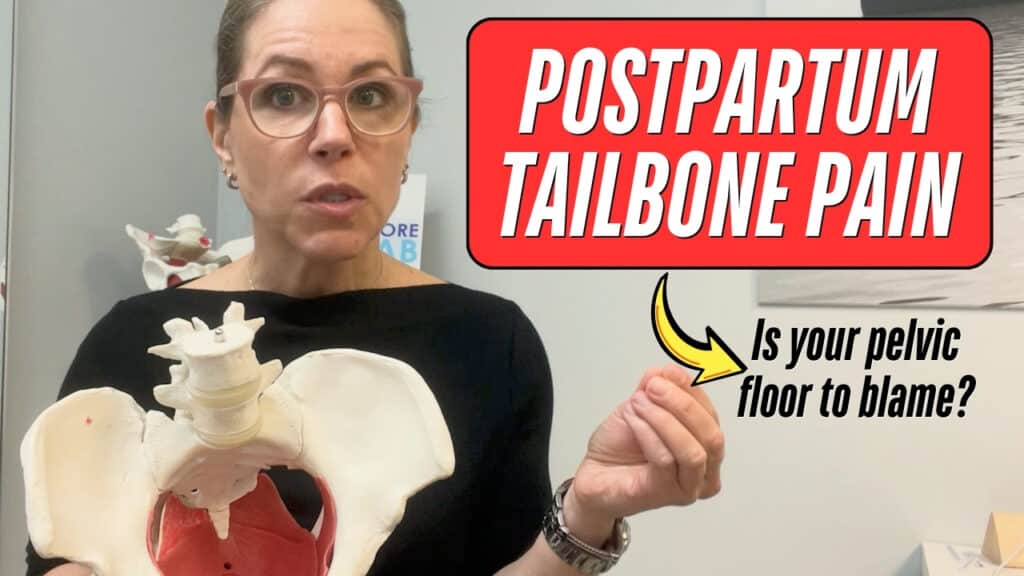
Tailbone pain after having a baby is common — but common does not mean normal. Because your pelvic floor muscles attach directly to the coccyx, tight or guarding muscles can keep pulling on that area long after delivery. Susan Winograd, MSPT explains what’s really behind postpartum tailbone pain and what actually helps.
Pelvic pain can be hard to diagnose, especially when the pain isn’t musculoskeletal. In this video, Susan Winograd PT breaks down 3 common symptoms that could be causing discomfort.
Are you using vaginal dilators to overcome pain with intimacy or pelvic pain, but you’re still experiencing discomfort during training? If so, stop right now! Pain during dilator training could be working against your progress – and Susan Winograd PT, Founder and Owner of Pelvicore Rehab & Wellness, is here to explain why, and how to use dilators the right way.
Susan Winograd MSPT explains the connection between endometriosis and pelvic floor dysfunction — including why up to 70% of women with endo have pelvic floor involvement, how the inflammation cycle drives overlapping conditions, and why pelvic floor physical therapy should be the first line of conservative treatment regardless of surgical status.
Manage Consent
To provide the best experiences, we use technologies like cookies to store and/or access device information. Consenting to these technologies will allow us to process data such as browsing behavior or unique IDs on this site. Not consenting or withdrawing consent, may adversely affect certain features and functions.
Functional
Always active
The technical storage or access is strictly necessary for the legitimate purpose of enabling the use of a specific service explicitly requested by the subscriber or user, or for the sole purpose of carrying out the transmission of a communication over an electronic communications network.
Preferences
The technical storage or access is necessary for the legitimate purpose of storing preferences that are not requested by the subscriber or user.
Statistics
The technical storage or access that is used exclusively for statistical purposes.The technical storage or access that is used exclusively for anonymous statistical purposes. Without a subpoena, voluntary compliance on the part of your Internet Service Provider, or additional records from a third party, information stored or retrieved for this purpose alone cannot usually be used to identify you.
Marketing
The technical storage or access is required to create user profiles to send advertising, or to track the user on a website or across several websites for similar marketing purposes.