

In this video, we discuss Endometriosis, Endometriosis symptoms, and Endometriosis treatment and diagnostic options. Endometriosis is a common but often misunderstood condition affecting many women.
⭐⭐⭐⭐⭐ Rated 5 Stars by 300 Patients — Read Our Reviews on Google!

Susan Winograd, MSPT, is a licensed physical therapist, pelvic floor specialist, and founder of Pelvicore Rehab & Wellness in Boca Raton, Florida. She earned her Master's degree in Physical Therapy from the College of Staten Island in 1998 and has spent nearly 30 years developing deep clinical expertise in pelvic floor dysfunction, women's and men's pelvic health, pre and postnatal care, chronic pelvic pain, and scar tissue release therapy. Susan takes a whole-body approach to healing — identifying and treating the root cause of her patients' symptoms rather than managing them in isolation. She is a member of the American Physical Therapy Association and has been featured on multiple health and wellness podcasts as a recognized pelvic floor specialist in South Florida.
Is your pelvic floor behind your symptoms?
Pain, pressure, leaking, or discomfort — these are signals your body is sending that something needs attention. Susan has helped hundreds of patients in Boca Raton get to the root cause and heal for good.
Have you ever been told you might benefit from pelvic floor biofeedback? Or maybe you’ve heard the term somewhere and had no real idea what it actually meant?
If so, you’re not alone. Biofeedback sounds complicated — a little clinical, a little intimidating. But it’s actually one of the most powerful and most reassuring tools we use in pelvic floor physical therapy.
The simplest way I can describe it: biofeedback is a mirror for your muscles.
Your pelvic floor muscles live deep inside your body. You can’t look in a mirror and see what they’re doing, and here’s the part that surprises people — many of us can’t accurately feel what they’re doing either. The connection between your brain and those muscles just isn’t as clear as it is for, say, the muscles in your hand.
That’s where biofeedback comes in.
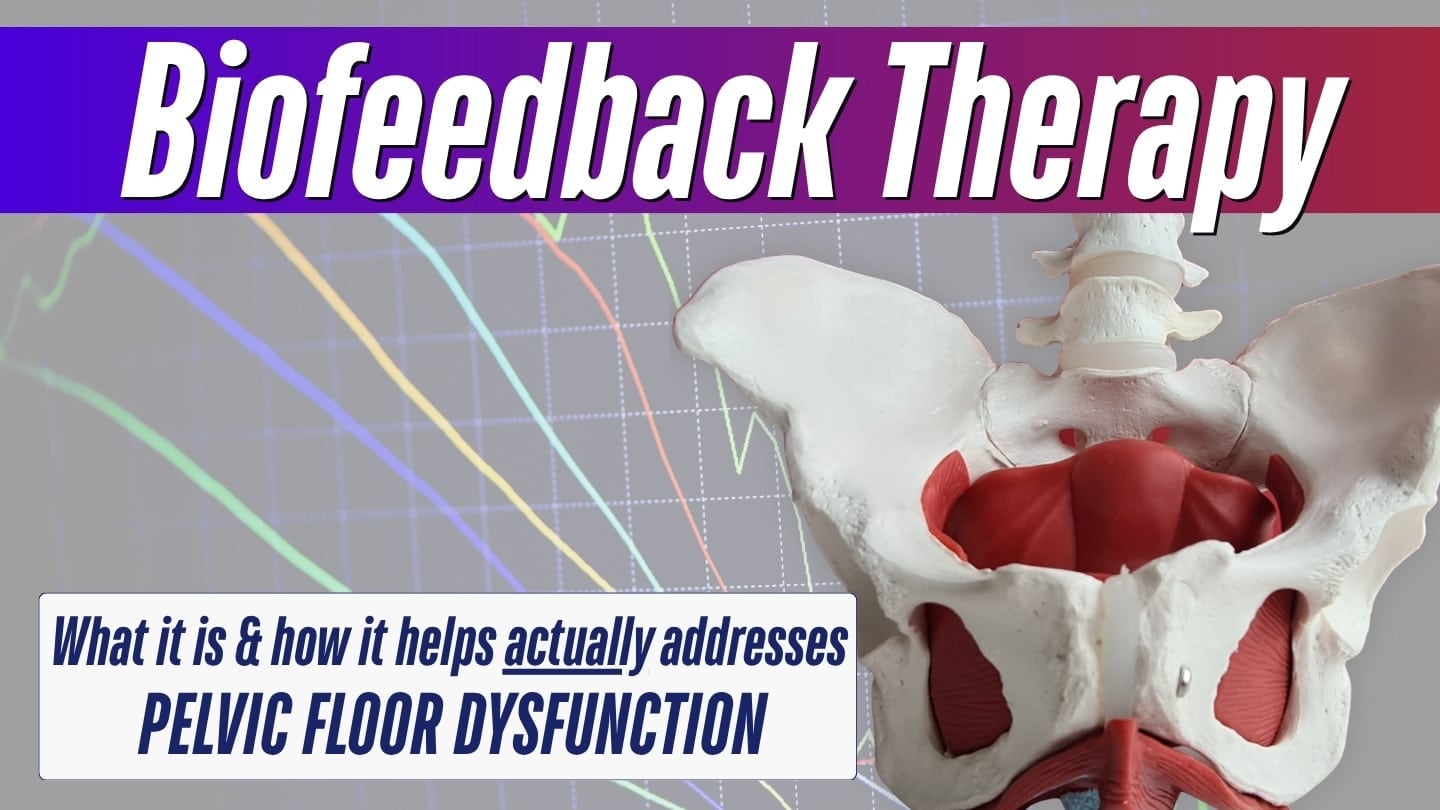
Pelvic floor biofeedback uses specialized sensors to show you what your pelvic floor muscles are doing in real time. On a screen, right in front of you, you can see whether those muscles are contracting, relaxing, holding onto tension, or coordinating with your breathing and your deep core muscles.
Instead of guessing, you get to see.
Here’s something that catches almost everyone off guard.
Pelvic floor problems aren’t always because the muscles are weak. Very often, it’s the opposite — the muscles are too tight. Sometimes they’re overworking. Sometimes they’re simply not coordinating with the rest of the body the way they should.
This matters enormously, because if you assume the answer is always “do more Kegels,” and your real issue is a pelvic floor that’s already too tight and can’t relax, you can actually make things worse. Biofeedback removes that guesswork by showing you what’s truly happening — not what you assume is happening.
And this is exactly why we say, all the time at Pelvicore: common does not mean normal. Common symptoms deserve real answers, not assumptions.
Biofeedback can be incredibly helpful for a wide range of people and symptoms, including those experiencing:
If any of that sounds familiar, biofeedback may be a valuable part of your care.
A lot of people feel nervous about what a session actually involves, so let me walk you through it.
Depending on your symptoms and your comfort level, sensors can be placed either internally or externally — this is always your choice and something we discuss together. Those sensors connect to a computer with a visual screen.
From there, I can guide you through pelvic floor contractions, relaxation exercises, postural changes, and even functional movements, all while you watch how your muscles respond in real time. You’re not being tested. You’re being shown.
One of my very favorite things about biofeedback is that it connects your brain with your body in a way almost nothing else can.
Sometimes people think they’re relaxing their pelvic floor, but on the screen we can see they’re actually tightening it. Sometimes people are certain they’re doing a Kegel correctly, but they’re really recruiting completely different muscles.
Biofeedback removes the guesswork. It lets you see what your body is actually doing — and once your brain can connect to that, real change happens much faster. You develop awareness, control, and confidence.
Here’s the best part: those improvements don’t stay in the clinic.
As your brain and your body become more connected, those new skills start carrying over into everyday life. You may notice better control and confidence when you’re exercising, when you’re walking, when you’re lifting your baby, when you’re going to the bathroom, or simply as you move through your day.
That’s when the lasting changes begin to happen — not because you memorized an exercise, but because your body finally understands the pattern.
The goal isn’t to create “perfect” muscles. There’s no such thing.
The goal is to create muscles that know what to do at the right time — when they should relax, when they should contract, and how they should work together with the rest of your body. Muscles that are coordinated, responsive, and connected to your brain.
Because that’s what pelvic health is really about. It’s about whole-body health.
If you’ve been struggling with symptoms and feeling like you’re guessing your way through your own body, biofeedback can be a genuine turning point. It takes something invisible and makes it visible — and that clarity is often exactly what’s been missing.
If you’re curious whether pelvic floor biofeedback could help you, we’d love to help you find out.
Have questions about your pelvic health during your postpartum journey? Book a Free Discovery Call
Want more pelvic floor health tips? Subscribe to our YouTube channel
📺 Related: Reset Your Pelvic Floor with Reverse Kegels & Breath
You don't have to just manage this.
Most pelvic floor conditions are highly treatable — and most patients see meaningful improvement within just a few sessions. Susan offers a free 15-minute discovery call so you can ask questions, understand your options, and take the first step toward feeling better. No commitment required.
Or book online — free, no obligation
Click & Share
Your pelvic floor can heal.
Get a free 15-minute call with Susan to talk through your symptoms.
More Wellness & Rehab Insights
In this video, we discuss Endometriosis, Endometriosis symptoms, and Endometriosis treatment and diagnostic options. Endometriosis is a common but often misunderstood condition affecting many women.
Learn 5 essential tips to heal abdominal separation (diastasis recti). Discover how alignment, pelvic floor health, and safe core exercises can restore strength and function