
⭐⭐⭐⭐⭐ Rated 5 Stars by Over 280 Patients — Read Our Reviews on Google!
Post Contents

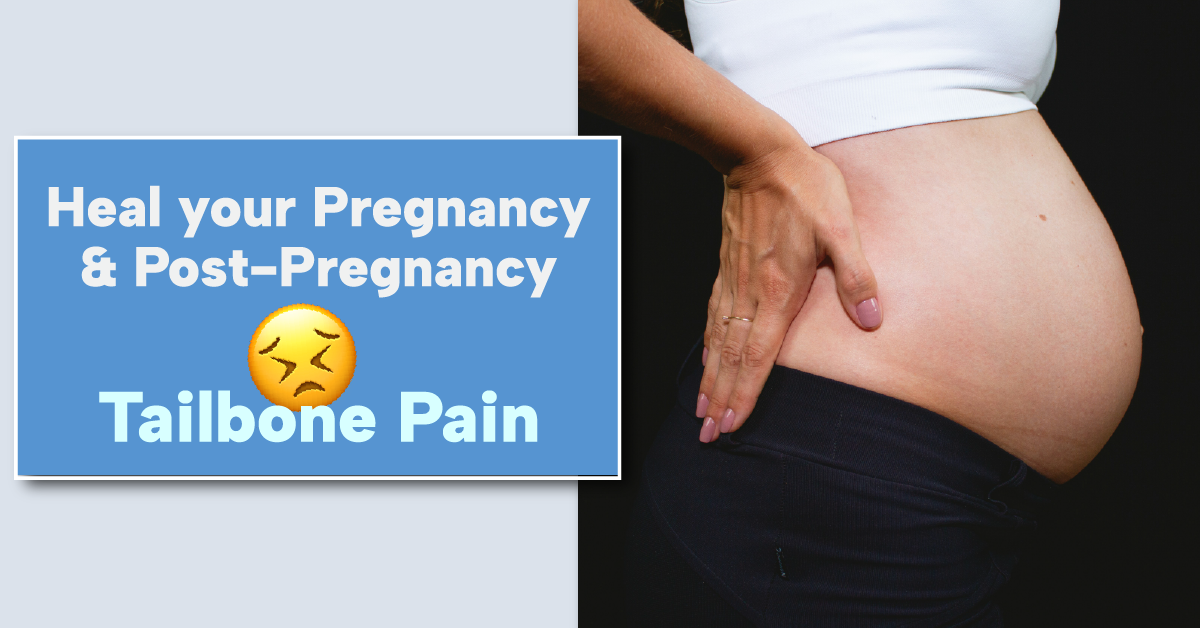
Tailbone Pain (Coccydynia) During Pregnancy & After Birth

The coccyx, more commonly known as the tailbone is a triangular shaped bone at the end of the spine. It actually represents a vestigial tail that disappears at around 8 weeks of gestation, hence the name tailbone. There is variance between individuals in coccyx anatomy and can consist of 3 to 5 different bones connected by ligaments at the bottom of the sacrum.
Picture of About Susan Winograd, MSPT

About Susan Winograd, MSPT

Susan Winograd, MSPT, is a licensed physical therapist, pelvic floor specialist, and founder of Pelvicore Rehab & Wellness in Boca Raton, Florida. She earned her Master's degree in Physical Therapy from the College of Staten Island in 1998 and has spent nearly 30 years developing deep clinical expertise in pelvic floor dysfunction, women's and men's pelvic health, pre and postnatal care, chronic pelvic pain, and scar tissue release therapy. Susan takes a whole-body approach to healing — identifying and treating the root cause of her patients' symptoms rather than managing them in isolation. She is a member of the American Physical Therapy Association and has been featured on multiple health and wellness podcasts as a recognized pelvic floor specialist in South Florida.

Your body is doing something extraordinary. Let's help it heal.

Whether you're preparing for birth or recovering from it, pelvic floor physical therapy makes a profound difference — less pain, faster recovery, and a stronger foundation for everything ahead. Susan has worked with pregnant and postpartum women for nearly 30 years.

The coccyx, more commonly known as the tailbone, is a triangular-shaped bone at the end of the spine. Pain in this area is clinically referred to as coccydynia. It represents a vestigial tail that disappears at around 8 weeks of gestation, hence the name tailbone. There is variance between individuals in coccyx anatomy, which can consist of 3 to 5 different bones connected by ligaments at the bottom of the sacrum.

What is the function of the coccyx?

  1. The coccyx is part of a 3-point tripod support system, together with the sit bones, to promote balance and stability in the seated position. It helps to distribute weight while sitting. The tailbone is the connecting point for many of the pelvic muscles, therefore, playing a role in pelvic floor stability and strength.
  2. It provides support to the anus and aids in defecation.
  3. It supports the vagina in females
  4. It provides support and stability during movement of the legs, such as walking and running.

Women are 5x more likely to have coccyx pain than men.

Why does the tailbone hurt during pregnancy and postpartum?

  1. Changes in posture and center of gravity during pregnancy and in the postpartum period.
  2. Positioning of the baby during pregnancy. If the baby is positioned posteriorly, the bony part of the baby’s head can push on the mom’s sacrum and tailbone, and can cause pain and discomfort.
  3. Birth trauma – by nature of what happens, the birthing process causes a destabilization of the sacrum and coccyx to allow the baby to pass through the birth canal. Although our bones are meant to move in predictable ways during the birthing process, it may lead to injury, such as muscle tears and over-stretching.
  4. The prolonged pushing phase of labor can cause the coccygeus muscle to spasm. Spasms in this muscle, located in the deepest layer of the pelvic floor, can pull the coccyx forward and cause pain.
  5. Pelvic floor muscles that are weak or in spasm can cause coccyx pain.
  6. Referred pain: Always remember that the root cause of pain may be at a site distant from where you actually feel the pain! Coccyx pain may be referred from a C-section scar, the hips, the lower back, and even pregnancy changes in the feet!

This is exactly why our whole-body evaluation at Pelvicore looks beyond the tailbone itself — your symptoms are not random. They’re messages.

Will it go away on its own?

For many women, tailbone pain improves in the weeks after delivery. However, if left untreated, research suggests it doesn’t always resolve on its own — particularly when pelvic floor tension has built up throughout pregnancy. The longer that tension persists, the harder it becomes to unwind. Early treatment with a pelvic floor PT typically leads to faster, more complete recovery.

Managing tailbone pain at home

  • Sit on a wedge-shaped coccyx cutout cushion rather than a standard donut pillow
  • Choose firm surfaces — soft sofas cause you to round your lower back and increase coccyx pressure
  • Avoid crossing your legs, which creates asymmetric pelvic floor tension
  • Practice deep diaphragmatic breathing — as you inhale, the diaphragm drops and the pelvic floor naturally releases, reducing pressure on the coccyx
  • When sitting for feeding or pumping, keep feet flat on the floor and lean slightly forward

What can a Pelvic Floor Specialist do to help you heal?

  1. Manual therapy: Many of the pelvic floor muscles attach to the coccyx. The pelvic floor muscles are like any other muscle in the body and respond extremely well to manual therapy!!
  2. Core component coordination: Making sure that your respiratory diaphragm is coordinating with your pelvic diaphragm is really important.
  3. Pelvic floor muscle training: These muscles need to be able to contract and relax. Weak pelvic floor muscles will not support the coccyx enough, tight or overactive pelvic floor muscles will pull it forward, and can cause pain. A spasm on one side may pull the coccyx to one side, causing pain as well.
  4. An individualized home exercise program for the coccyx is essential for long-term healing.
  5. Postural training in all positions to help retrain neutral alignment.
  6. Body mechanic training teaches you how to use the right muscles for certain movements so that you’re not compensating and causing more coccyx pain.

Tailbone pain during pregnancy and after birth is one of the most common conditions we treat at Pelvicore Rehab & Wellness. Whether your coccyx pain started during pregnancy, after a vaginal delivery, or following a C-section, pelvic floor physical therapy addresses the musculoskeletal root cause directly — including manual therapy, scar tissue release for birth-related trauma, and postural retraining. Learn more about our Pregnancy & Postpartum Physical Therapy program in Boca Raton.

Pregnancy and postpartum care that goes deeper.

Leaking, prolapse, diastasis recti, C-section recovery, painful intercourse after birth — these are conditions Susan treats every day. You don't have to wait and hope they resolve on their own. A free 15-minute call is the first step toward real recovery.

Or book online — free, no obligation

Click & Share

Post Contents

Heal & recover

Free 15-minute call with Susan to talk through your recovery.

More Wellness & Rehab Insights